Cognitive Neuroscience Society

The Journal of Cognitive Neuroscience

  • Home
  • Annual Meeting
    • General Information
      • CNS Donation Page
      • CNS 2027 Annual Meeting
      • Code of Conduct
      • Accessibility at CNS
      • Dates and Deadlines
      • Inspire Discovery: Sponsor a Travel Award
      • Annual Meeting Workshop Policy & Application
      • Networking
      • Exhibit with Us!
    • Program
      • Previous Meetings Programs & Abstracts
    • Attendee Resources
      • Venue Information
      • International Travelers
    • Hotel
      • Hotel Reservations
      • Student Hotel Reservations
    • Registration
      • Registration
      • Registration Policies, Cancellations & Refunds
      • Registration FAQ
    • Submissions
      • Submit a Symposium
      • Submit a Poster
      • Printed Poster Guidelines
      • Preparing and Promoting Your Presentation
      • Data Blitz
      • GSA or PFA Application
  • About CNS
    • Boards and Committees
    • CNS Diversity and Inclusion Statement
  • Membership
    • Information and Benefits
    • Join or Renew Membership
    • Membership FAQs
    • Newsletter
      • CNS Newsletters
      • Submit an Announcement
      • Newsletter FAQs
  • Awards
    • Travel Award
    • George A. Miller Award
    • The Distinguished Career Contributions Award
    • Young Investigator Award
    • Young Investigator Award Nominations
  • News Center
    • CNS Blog
    • CNS 2026 Press Room
    • CNS 2026 Blog
    • CNS 2025 Blog
    • CNS 2024 Blog
    • CNS 2023 Blog
    • CNS 2022 Blog
    • CNS 2021 Blog
    • CNS 2020 Blog
    • Blog Archives
    • Media Contact
  • CNS Archives
    • Conference Videos
    • Previous Meetings Programs & Abstracts
  • MY CNS
    • Account Login
    • Create an Account
  • Contact Us
post

Using Disharmonic Melodies to Test OCD Symptoms

October 3, 2014

We’ve all had moments when something just didn’t seem quite right – perhaps a slightly crooked photo hanging or a book that seems out of place on the shelf. For people with obsessive compulsive disorder (OCD), these feelings are more frequent and intense. In a new study, researchers have found a new way to test […]

By lmunoz Filed Under: Uncategorized Tagged With: clinical, music, ocd

post

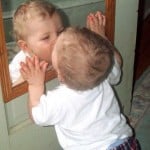
Tourette’s Symptoms Increase When Patients Watch Themselves Tic

September 19, 2014

credit: http://commons.wikimedia.org/wiki/File:Mirror_baby.jpg

When we see children moving their bodies uncontrollably, we sometimes tell them to calm their bodies and thereby draw their attention to the unwanted behavior. But for people with Tourette’s syndrome, being more aware of their tics may actually exacerbate the actions. In a new study, researchers found that people with Tourette’s syndrome who watched […]

By lmunoz Filed Under: Uncategorized Tagged With: awareness, clinical, tourette's, visual

post

Drawing Draws on Complex Cognitive Processes

July 14, 2014

http://commons.wikimedia.org/wiki/File:Sketchbook_AC_2006.jpg

Drawing objects seems like a simple task – most of us, from young to old, can copy simple pictures even if we lack artistic talent. An inability to draw simple pictures is often a symptom of a cognitive disorder or brain damage. New research looking at stroke patients has found that drawing depends on several complex cognitive processes […]

By lmunoz Filed Under: Uncategorized Tagged With: clinical, cognition, drawing, stroke

post

Holiday Blues? Identifying Markers for Anxiety in the Brain

December 5, 2013

We hear a lot about anxiety and depression around the holidays – people feeling lonely and far from family or overloaded with stress. Although we may think of anxiety and depression separately, they often go hand in hand. Scientists are now working to better understand the different types of anxiety people experience, and a new […]

By lmunoz Filed Under: Uncategorized Tagged With: anxiety, clinical, default-mode network

post

CNS 2013 Meeting: From the Frontal Lobe and Beyond: Robert Knight

April 16, 2013

A neural device to help patients who do not have the ability to speak is now possible, thanks in part to the work of Robert Knight. Celebrating career accomplishments, leadership, and mentoring, CNS presented the second annual Distinguished Career Contributions Award to Knight on Monday afternoon at the annual meeting in San Francisco. For the […]

By lmunoz Filed Under: Uncategorized Tagged With: children, clinical, robert knight Leave a Comment

Recent Posts

  • Borrowing from Improv to Decode Language in Everyday Conversation 
  • Computational Models Reveal Brain-Behavior Relationships in Adolescents
  • Brief Exposures to Nature Can Reset Attention, Especially for Nature Lovers 
  • Survival to Sustainability: Building a Career That Lasts
  • Down the Rashomon Hole: Reflections on Mapping Emotions in the Brain

Blog Archives

Contact

Cognitive Neuroscience Society
C/O Center for Mind and Brain
267 Cousteau Place
Davis, CA 95618
info@cogneurosociety.org

Recent Posts

  • Borrowing from Improv to Decode Language in Everyday Conversation 
  • Computational Models Reveal Brain-Behavior Relationships in Adolescents
  • Brief Exposures to Nature Can Reset Attention, Especially for Nature Lovers 
  • Survival to Sustainability: Building a Career That Lasts
  • Down the Rashomon Hole: Reflections on Mapping Emotions in the Brain

Archives

Blog Archives

Previous Meeting Programs and Abstracts

Past Newsletters

All contents © Cognitive Neuroscience Society 1995-2026