
Keynote Address by Eveline Crone
Dr. Eveline Crone will deliver her lecture in Boston, MA, March 20, 2027 at the Boston Marriott Copley Place Hotel.
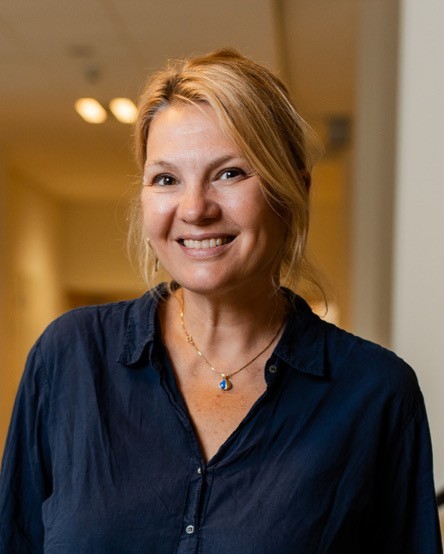
Social Connection in Challenging Times
Eveline Crone, PhD
Erasmus University Rotterdam; Society, Youth & Neuroscience Connected Lab
Saturday, March 20, 2027, 5:00 - 6:00 pm, Grand Ballroom
03/20/2027 5:00 PM
03/20/2027 6:00 PM
America/New York
CNS 2027 | Keynote Address by Eveline Crone
Grand BallroomThe Keynote Address by Eveline Crone entitled 'Social Connection in Challenging Times' will be held in person at the CNS 2027 Annual Meeting in Vancouver at the Boston Marriott Copley Place Hotel located at 110 Huntington Ave, Boston, MA 02116
Young people today grow up in a challenging world with multiple, interconnected crises, including climate change, polarization and geopolitical tensions. Yet, our research shows that the human brain has remarkably capabilities for social connection, adaption and creativity that can help us navigate these challenges. Drawing from longitudinal datasets, we found that that the emergence of brain regions involved in reward processing, perspective taking and prosocial behavior is associated with youth mental health, as well as young people’s motivation to act, contribute and engage with the world around them.
In this talk, I will provide a hopeful perspective showing that the adolescent and young adult brain is attuned to social connection and societal contribution, while the adult brain can provide the guidance to channel these capacities toward positive societal change. I will provide examples that participatory action research combined with neuroscience methods provides novel directions for actionable pathways, supporting young people as agents of societal change.
About
Dr. Eveline Crone is Dutch professor in Developmental Neuroscience in Society at Erasmus University Rotterdam. Her research focuses on risky behaviors in adolescent humans during puberty and examines the function of those risks. For her research in adolescent brain development and behaviour, she was awarded the Spinoza Prize the highest recognition for Dutch scientists, in 2017.
Dr. Crone's uses functional magnetic resonance imaging and various other scientific techniques to examine brain processes in adolescent brains. She characterizes adolescence as a "useful development phase in which the brain learns to deal with a larger social environment," as opposed to a necessary evil.
For her research, she received prestigious grants and awards, including the VENI-VIDI-VICI and ERC, the Huibregtsen Prize for Science & Society, the J.C. Ruijgrokprijs, the Junior Heymansprijs, and the Hendrik-Mullerprijs for contributions to the social sciences. In 2017, at the age of 41, she received the Spinozaprijs, the highest distinction in Dutch science. In interviews, she stated that she would use the prize money to continue her research on risk taking in the adolescent brain and to connect investigations on identity, altruism, and social networks that allow young people to thrive.
She currently leads the 10-year Growing Up Together in Society (GUTS) program (2023-2033) a large-scale multi-site program on neural and social development. Her research takes a science-society approach; through fundamental research combined with youth participatory action research, her lab (https://erasmus-synclab.nl/) contributes to solutions to major societal challenges affecting youth.
Crone is a member of the Royal Netherlands Academy of Arts and Sciences (KNAW), Corresponding Fellow of The British Academy, and Member of the US National Academy of Sciences (NAS). She is on the board (past president) of the International Flux Society for Developmental Cognitive Neuroscience, past Vice-President for Social Sciences and Humanities of the Scientific Council of the European Research Council (ERC), the European Commission’s flagship program for excellent science.