
CNS 2022
Guest post by Teodora Stoica
Similar to constructing a pyramid, learning a new skill requires building both dynamically and efficiently upon an already existing foundation. During this year’s Cognitive Neuroscience Society meeting (CNS 2022), Jiefeng Jiang of the University of Iowa illustrated that learning a simple task can facilitate the learning of complex tasks by integrating previously acquired knowledge. Learning, in other words, is hierarchical.
This insight is but one to emerge from two symposiums at CNS 2022, “New Perspectives on the Interplay between Memory and Cognitive Control” and “”Localization of Function in Times of Network Science.” From exploring the structure of learning and understanding its energy cost to the underlying neurochemicals and how it is affected by trauma, the talks highlighted the complex and nuanced mechanisms by which people learn tasks, whether you are working to knit a scarf or master the piano.
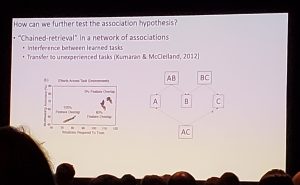
Figure 1: Simple, subordinate tasks can be learned and then shared by multiple complex, superordinate tasks as building blocks to facilitate task learning.
In his talk, Jiang used a simple diagram (see Figure 1) to show how people create representations of tasks through associations that allow us to more easily build upon past experiences. Sharing a simple function (such as A, B, C in Figure 1) allows the dynamic integration of these functions into larger sets (such as AB or BC).
However, sharing can also cause interference between the memories of complex tasks (not being able to retrieve B because of AC overuse in Figure 1). Jiang speculated this may be due to impaired memory for one task while doing another task. He concluded that without this “shared task representation,” neither interference nor integration would occur. “In this way,” he said, “integration may be viewed as a benefit at the cost of interference.”
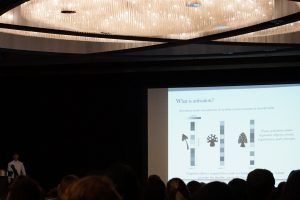 While integration is essential to learning, like any cognitive process, it requires effort. In her talk, Dani Bassett of University of Pennsylvania (pictured at left/below) explored whether cognitive effort is the same as directed attention. They explained that cognitive effort is distinct, underlying a dynamic shift from one activity state to another, where each activity state includes several combinations of brain networks. For this reason, it may be that integration of smaller tasks underlying hierarchical learning expends energy precisely because network transitions are taxing, in the same way re-orienting yourself in a new city may be challenging.
Difficulty does not have to equate to tedium, however. Roshan Cools of Radboud University Nijmegen provided evidence establishing the neurotransmitter dopamine as boosting attention and tagging the cognitive effort as beneficial. As a consequence of dopamine’s critical effect in shaping cognitive control and affecting learning, hierarchical learning may be thought of as fun.
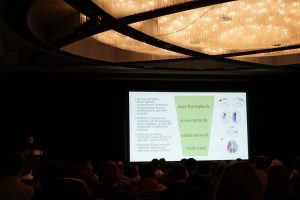 Another key aspect of learning is the formation of new neural networks in the brain, a phenomenon known as neuroplasticity. Yet much remains unknown about the impact traumatic brain injury has on neuroplasticity. Brenda Rapp of Johns Hopkins University discussed neuroplasticity (pictured at right/above) after real and simulated lesions and the subsequent effects of behavioral interventions. Rapp took the audience on a journey from the macro to the micro , and along the way built a foundation for understanding the neuroplastic changes that affect both local and global network communication.
An important takeaway from Rapp’s talk is that neuroplasticity could rely on the ability to differentiate between neural representations. Using this clinical framework, traumatic brain injury may profoundly impact hierarchical learning by disrupting the ability to distinguish between simple tasks and create complex ones.
—
Teodora Stoica is a Postdoctoral Fellow at the University of Arizona investigating brain network alterations during aging. You can find more of her writing on her website.

Leave a Reply
You must be logged in to post a comment.