
Q&A with Joseph LeDoux
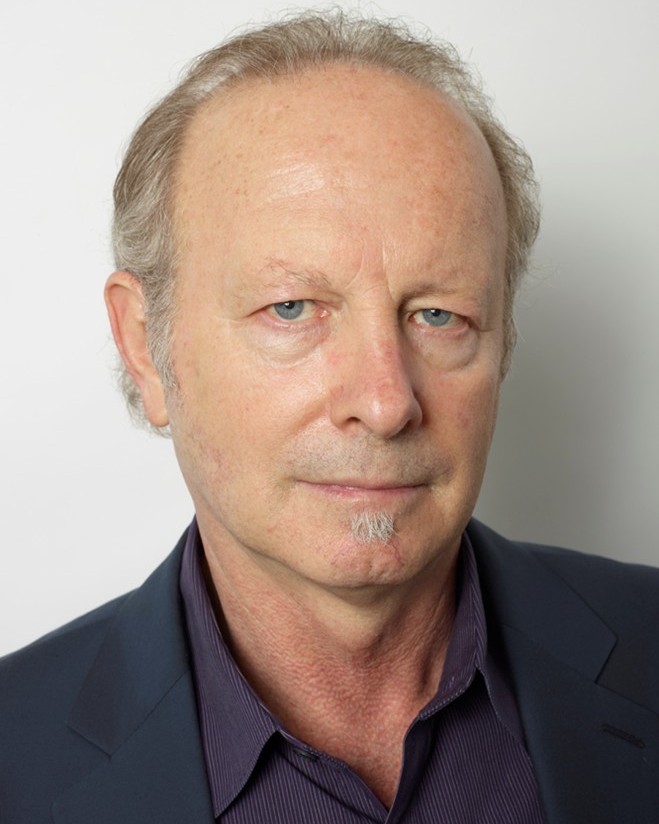 When asked about his career journey in cognitive neuroscience. Joseph LeDoux points to a documentary about Beatles producer George Martin. In the film, Martin says something that has always resonated with LeDoux. When asked why he thinks he was so successful in music, Martin says something like: “when I started music school, I had very little musical training, and so I always felt like an outsider, and being an outsider allowed me to do things that ordinarily one wouldn't do.”
Like Martin, LeDoux, also a musician as the lead singer for the Amygdaloids, feels like he started very much as an outsider in neuroscience. Having started his educational path in marketing, with no formal exposure to science, he learned on the job. “I think of my life in terms of just tremendous luck in a lot of different ways,” says LeDoux, who is receiving the CNS 2026 George A. Miller Award for his decades of research on the cognitive neuroscience of emotion. “I had some luck and some ideas about where to go with things that didn't necessarily follow conventional patterns.”
I spoke with LeDoux, who is now professor emeritus after many years at NYU, about his early work, why he thinks it’s important to study the connection of emotion with consciousness, and advice he has to early career scientists.
CNS: How did you get started in cognitive neuroscience?
LeDoux: Well, it's kind of a long story. I had two degrees in business administration and marketing. I was doing work in consumer protection, but was totally bored with the academics of business. I started taking a lot of psychology courses because that seemed more interesting. The course I took that changed my life was called Learning and Motivation, which I thought was going to be about human behavior, and it turned out to be about rat brains and memory. I grew up in a small town in Louisiana, and I didn't have any kind of scientific background, so I had no idea that you could study rat brains and memory and make a living out of that.
As a side note, my job in my father’s meat market when I was young was to clean the brains, and especially to use my tiny fingers to extract the bullet from what I now know to be the frontal lobe.
Truthfully, though, I don’t think that my early exposure to cow brains influenced my career path. The taking of the wrong class was much more significant, as it led me to hang out in my psychology professor’s lab for a semester, and by the end of the semester, I told him that I thought I'd like to do what he does instead. And he kind of looked at me like, like ‘you have no scientific training at all.’ But I asked if he would write me a letter to apply to graduate programs, and he did. I don't know how many places he sent a letter, but he did send one to Stony Brook, and that was the only place that accepted me. That's where I met Mike Gazzaniga, and from there, you could kind of say everything was history.
CNS: I know that with Gazzaniga you started working with “split brain” patients. With him you discovered insights about how such patients verbally generated narratives to make unconscious behaviors make sense to the conscious mind. How did you come to work on emotion after that?
LeDoux: Mike and I moved to Cornell Medical School in the fall of 1978. And after a year or so, I told Mike I really wanted to try to find some way to study emotion. He connected me with a neurobiologist there who took me into this lab, and that's where I got started doing animal work. I had no illusion of being able to study conscious emotion in rats. I was really thinking of studying emotional behavior, because what we concluded from some brain studies was that emotional behaviors might be the kind of behaviors that are unconsciously produced and that require that we generate narratives to explain why we did what we did.
After a couple of years, publishing some papers, I decided to apply for a grant. When I got the reviews back, they said that neuroscientists don't study emotion. From there, I disguised my work as Pavlovian conditioning. But when I would write chapters or things like that, I would always put in a part at the end about emotional consciousness. Eventually, I would write the book The Emotional Brain [one of several books written by LeDoux], which I think helped put emotion on the map.
CNS: Since then, you have done a lot of writing about emotion and consciousness, including a lot in the popular press. But the connection is still poorly understood and understudied, as you will discuss in your award lecture this March in Vancouver. Why is it important to bring these together?
LeDoux: If you take a look at the study of consciousness, one thing that's missing is emotion. The field is all about looking at dots and moving targets on a visual screen. But emotions are the most important kind of consciousness; they just haven't been studied properly as conscious states. And there are two reasons: one is because the people that study consciousness don't care much about emotion, but the other is that people who study emotion don't care much about consciousness.
I worked on the amygdala and so-called “fear” for decades, but I long referred to it as implicit, or unconscious, fear, and saved conscious fear to talk about the conscious feeling of fear and other emotions. The emotion is the conscious feeling. And going back to the work Mike [Gazzaniga] and I did in the 70s, consciousness, including emotional consciousness, comes about by way of cognitive interpretations of situations. People often talk about the unconscious fear processes, the behavioral and physiological responses, being emotional, but they're not. I think they are ancient defensive, survival responses, and that's a different thing altogether.
CNS: Stepping back to the bigger picture, what advice do you have to early-career cognitive neuroscientists?
LeDoux: Often when I was recruiting students for the graduate program at NYU, I would ask them, ‘What do you want to do in grad school ?’ And they’d say ‘I want to do optogenetics’ or ‘I want to do fMRI,’ but they had no idea of what they wanted to study psychologically. We are in the golden age of technical sophistication in neuroscience. But equally important, actually more important, is the conception of what you want to work on functionally. Philosophers are taught to think in graduate school, and scientists are taught how to do research. We could use a little training about how to conceptualize problems that we want to work on.
CNS: Is there anything else you would like to add?
LeDoux: Mike [Gazzaniga] treated me like a colleague rather than a wet-behind-the-ears kid with no knowledge of brain research. Without his support and belief in me, I would have gone nowhere.
-Lisa M.P. Munoz
