
CNS 2026 Q&A with Monica Rosenberg
Monica Rosenberg has been interested in the brain-mind interface before she even knew it was possible to study it professionally. In a fourth grade science fair project, she tested the effects of aging on reaction time by having people catch a ruler dropped vertically and recording how far it fell before they caught it. “I regressed a bit in fifth grade with a project called ‘Do plants have brains?’ she says.
Rosenberg’s fascination with the human brain has persisted from those early explorations to her work now as a cognitive neuroscientist at the University of Chicago. “Brains are so commonplace in our lives that it’s easy to take them for granted, but when you stop to think about it, it’s absolutely remarkable that our minds emerge from electrified meat,” she says, referencing a description from Terry Bisson.
For her research on attention, including developing brain-based predictive models to gain insights into attentional states and other cognitive processes, Rosenberg is a co-recipient of the CNS 2026 Young Investigator Award. I spoke with her about her body of work, including new studies from her lab team and what she finds most valuable about brain-based prediction.
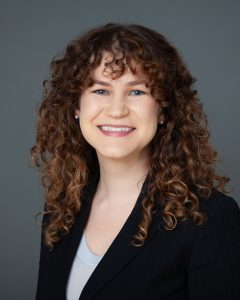 CNS: Much of your work seems to focus on individual differences in brain dynamics and creating predictive models. Where are the biggest gaps in research in that area right now?
Rosenberg: For me the biggest open question is: why? For example, we have evidence that individual differences in features of brain activity, like functional connectome organization, can predict differences in behavior but we still don’t understand why. Are they causally related? What is the mechanistic link?
Another big question I have is how neural phenomena at different spatial and temporal scales fit together. Attentional state, for example, can be decoded from neuronal population activity, large-scale functional connectivity patterns, and low-dimensional brain state dynamics. How are these levels and approaches related, and what information is uniquely available at each scale? I learned a lot writing about this recently with Hayoung Song and JeongJun Park.
CNS: How is your lab going about studying those gaps?
Rosenberg: We’ve been trying to understand why functional connectivity measured during rest predicts individual differences in behavior. A common hypothesis is that some connectome organizations support more “efficient” cognitive and attentional processing, leading to better performance. Another possibility, however, is that people with different traits and behaviors think differently during rest, and these thoughts are reflected in their connectivity patterns.
Work led by Jin Ke, a former lab manager in my lab, supports this second idea, although the two hypotheses aren’t mutually exclusive. We found that functional connectivity patterns predict how people rate their own thoughts and even what they tell us they thought about during rest. These same connectivity patterns also relate to trait-level differences in other people. This work is making me think differently about connectome-based predictions and I hope contributing to a broader effort in cognitive neuroscience to measure and model subjective states rather than treat them as noise.
CNS: Have any of the recent results from your lab been surprising?
Rosenberg: Two projects come to mind. Anna Corriveau, a PhD student in my lab, leads work on how fluctuations in attention shape neural representations and memory. She discovered that when attention is engaged in a task, people not only remember task-relevant information better, but also better remember task-irrelevant information that was present at the same time. As an attention researcher, this lack of tradeoff between memory for relevant and irrelevant information could have been surprising, but as a long-time doodler, I found it validating.
The second project is ironically about surprise. Ziwei Zhang, a PhD student in my lab, showed that dynamics of the same functional brain network predict when people are surprised as they do a learning task and watch basketball games. She recently found that this brain network also tracks narrative events that are judged as surprising by both people and large language models. By comparing neural predictions of surprise with human judgments and different computational measures of “surprise” in language models, we are testing hypotheses about the cognitive computations that give rise to surprise in different contexts. I’ve argued that brain-based predictive models are valuable not just for predictions themselves, but for what they reveal about the structure and nature of the mind. This project continues to surprise me by how clearly it does that.
CNS: These studies cover a range of cognitive processes. What unites your study of these processes?
Rosenberg: I’m first and foremost an attention researcher. I want to understand how we focus and why we lapse, and how attentional states and abilities affect and are affected by what we perceive, understand, learn, remember, and feel. A common thread that runs through my work is using brain-based predictive models to gain new insights into these processes.
Brain-based prediction is a powerful tool, but not necessarily for the reasons people might think. I see its value for cognitive neuroscience as what model predictions and failures can tell us about the mind. Asking how mental states and experiences are encoded in brain organization and dynamics, and when those encodings are shared or distinct across people, time, and contexts, can help us move from description to explanation.
We want to understand how and why attention changes across different time scales and how experiences and environments—everything from sleep to air pollution to hormones to technology use—shape attention over time.
CNS: What are the next steps for your work?
Rosenberg: We’re thinking more about longitudinal change and minds and brains in context. We want to understand how and why attention changes across different time scales and how experiences and environments—everything from sleep to air pollution to hormones to technology use—shape attention over time.
CNS: What are you most looking forward to about the CNS meeting in Vancouver?
Rosenberg: I’ve always left CNS feeling inspired by the science and the people. I’m excited to see old friends, meet new ones, and come home with lots of doodles and ideas.
CNS: Is there anything I didn’t ask you about that you’d like to add?
Rosenberg: I’m deeply grateful to mentors, collaborators, colleagues, and reviewers for challenging and supporting me in equal measure. I’m especially grateful to students and trainees for continually pushing me out of my scientific comfort zone, expanding my thinking, and making work a fun place to be.
-Lisa M.P. Munoz
