Cognitive Neuroscience Society

The Journal of Cognitive Neuroscience

  • Home
  • Annual Meeting
    • General Information
      • General Information
      • CNS Donation Page
      • CNS 2026 Annual Meeting
      • Code of Conduct
      • Accessibility at CNS
      • Dates and Deadlines
      • Inspire Discovery: Sponsor a Travel Award
      • Annual Meeting Workshop Policy & Application
      • Networking
      • Exhibit with Us!
    • Program
      • CNS 2026 Sponsors
      • CNS 2026 Partners
      • Schedule of Events
      • Keynote Address
      • George A. Miller Award Lecture
      • Distinguished Career Contributions Award Lecture
      • Young Investigator Award Lectures
      • Invited Symposia
      • Symposia
      • Rising Stars Session
      • Poster Sessions
      • Data Blitz Sessions
      • Workshops, Socials & Special Events
      • Previous Meetings Programs & Abstracts
    • Attendee Resources
      • Venue Information
      • Download Programs
      • Destination Vancouver
      • International Travelers
      • Advanced Declaration
      • Local Attractions
      • Getting Around
      • Food and Drink
      • Enriching Experiences at the JW
    • Hotel
      • Hotel Reservations
      • Student Hotel Reservations
    • Registration
      • Registration
      • Registration Policies, Cancellations & Refunds
      • Registration FAQ
    • Submissions
      • Submit a Symposium
      • Submit a Poster
      • Printed Poster Guidelines
      • Promoting Your Presentation
      • Data Blitz
      • GSA or PFA Application
  • About CNS
    • Boards and Committees
    • CNS Diversity and Inclusion Statement
  • Membership
    • Information and Benefits
    • Join or Renew Membership
    • Membership FAQs
    • Newsletter
      • CNS Newsletters
      • Submit an Announcement
      • Newsletter FAQs
  • Awards
    • Travel Award
    • George A. Miller Award
    • The Distinguished Career Contributions Award
    • Young Investigator Award
    • JoCN Travel Fellowship Award
    • 2026 GSA/PFA Award Winners
  • News Center
    • CNS Blog
    • CNS 2026 Press Room
    • CNS 2026 Blog
    • CNS 2025 Blog
    • CNS 2024 Blog
    • CNS 2023 Blog
    • CNS 2022 Blog
    • CNS 2021 Blog
    • CNS 2020 Blog
    • Blog Archives
    • Media Contact
  • CNS Archives
    • Conference Videos
    • Previous Meetings Programs & Abstracts
  • MY CNS
    • Account Login
    • Create an Account
  • Contact Us
post

When Children Try to Remember Many Things At Once

May 18, 2015

https://commons.wikimedia.org/wiki/File:Story_Time.jpg

Put on your shoes and jacket, then grab your lunch bag and turn off the lights – sounds simple, right? But to a 5-year-old, this multi-step process could be tricky to follow, especially if the child is distracted. What’s at play here is working memory – holding things in your mind that you can’t see. […]


By lmunoz Filed Under: Uncategorized

post

What Makes an App Educational?

May 4, 2015

https://commons.wikimedia.org/wiki/File:Child_with_Apple_iPad.jpg

Just last week, a widely publicized study came out showing that more than one-third of children under the age of 1 have used a device like a smartphone or tablet and that most children have used mobile devices by age 2. With this increased usage has come an explosion in educational apps for young children. […]

By lmunoz Filed Under: Uncategorized

post

New Brain Imaging Techniques Can Improve Testing for Mild Concussions

April 22, 2015

credit: http://commons.wikimedia.org/wiki/File:Football_cross.jpg

Guest Post by Nick Wan, Utah State University Last year, college football player Kosta Karageorge committed suicide, with his last text sent to his mother was “Sorry if I am an embarrassment, but these concussions have my head all [messed] up.” Two years prior, NFL player Junior Seau committed suicide via chest wound, leaving his brain […]

By lmunoz Filed Under: Uncategorized Tagged With: concussion, fNIRS, imaging

post

How the Developing Brain Moves from Cooties to Crushes

April 17, 2015

credit: Modestas Jonauska

For the first time, researchers have found the signals for “cooties” and “crushes” in the developing brain. In a new study, cognitive neuroscientists have highlighted how the brain responds to gender across a range of ages. Led by Eva Telzer of the University of Illinois, Urbana-Champaign, the researchers found that young children had heightened brain […]

By lmunoz Filed Under: Uncategorized

post

Watch 2 Videos: Anjan Chatterjee and Marta Kutas at CNS 2015

April 13, 2015

Two videos from CNS 2015 are now available: 1. From the origins of Max Factor to the evolutionary role of art, Anjan Chatterjee of the University of Pennsylvania delivered the CNS 2015 keynote address about the neuroscience of art and aesthetics. Watch the full talk here: Check out highlights of his talk on our meeting […]

By lmunoz Filed Under: Uncategorized

post

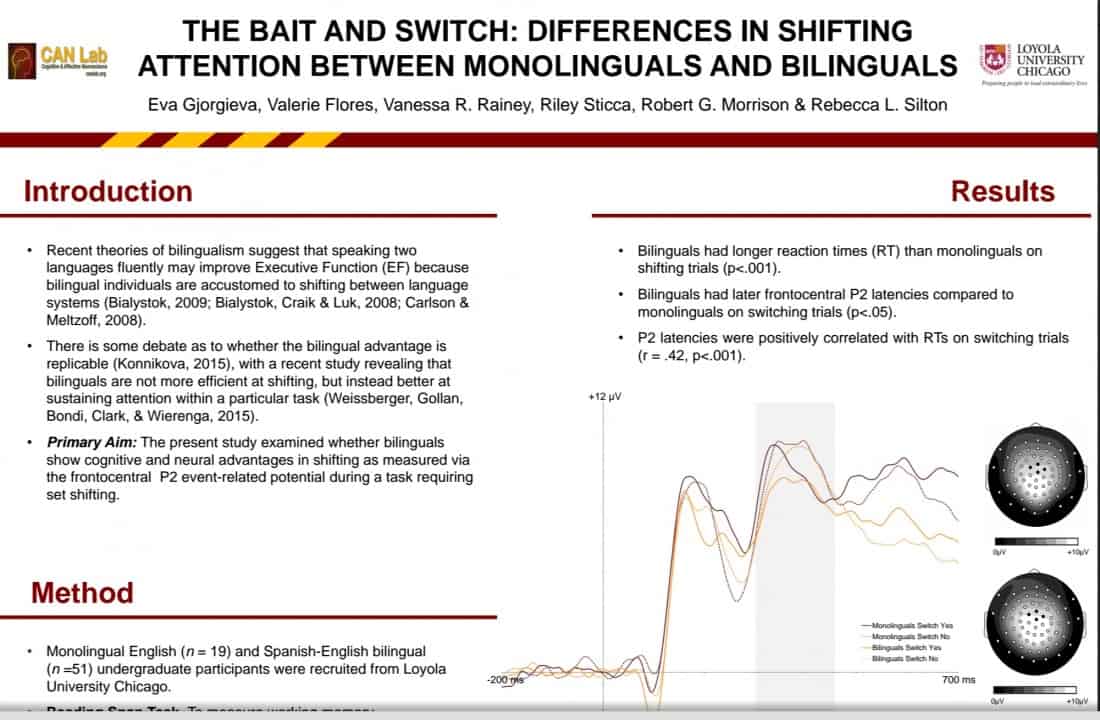
Faster Task Switching for Bilinguals?

April 2, 2015

People who speak multiple languages seem to effortlessly shift from one language to another. A logical conclusion from such observations would be that multilingual individuals are better able to switch between tasks. But recent research suggests that is not necessarily the case: In a new study, scientists found that switching between tasks actually took longer […]

By lmunoz Filed Under: Uncategorized

post

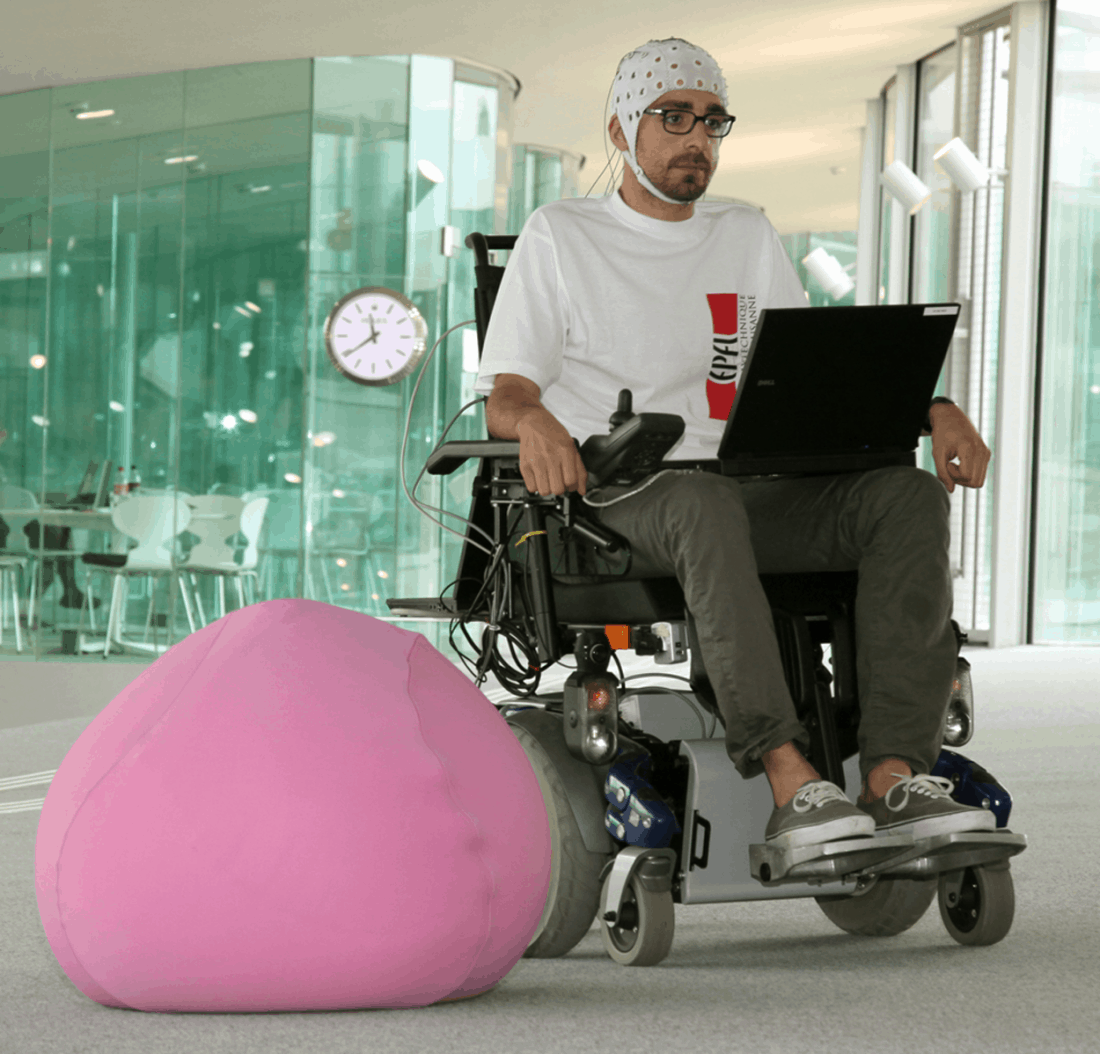
Intelligent Neuroprostheses Mimic Natural Motor Control

March 30, 2015

Credit: José del R. Millán

CNS 2015 Press Release March 30, 2015 – San Francisco – Neuroscientists are taking inspiration from natural motor control to design new prosthetic devices that can better replace limb function. In new work, researchers have tested a range of brain-controlled devices – from wheelchairs to robots to advanced limbs – that work with their users […]

By lmunoz Filed Under: Uncategorized

post

Babies Learn Language Socially

March 29, 2015

“It has to be social.” That’s the advice Patricia Kuhl gave to me and another CNS 2015 attendee following her riveting talk about language development. It doesn’t matter exactly when you introduce a new language to a child under 7, she said, as much as it matters that the learning is in a social setting. […]

By lmunoz Filed Under: Uncategorized

post

Rats, Reasoning & Rehabilitation: Neuroscientists are Uncovering How We Reason

March 29, 2015

http://commons.wikimedia.org/wiki/File:Rat_diabetic.jpg

CNS 2015 Press Release March 29, 2015 – San Francisco – Even rats can imagine: A new study finds that rats have the ability to link cause and effect such that they can expect, or imagine, something happening even if it isn’t. The findings are important to understanding human reasoning, especially in older adults, as […]

By lmunoz Filed Under: Uncategorized

post

5 Lessons from the Neuroscience of Art and Aesthetics

March 28, 2015

The packed CNS 2015 keynote on the neuroscience of art and aesthetics was full of big ideas. Here are 5 to ponder: Beauty exists within the realm of aesthetics but also doesn’t always overlap with art. #CNS2015 — Nick Wan (@nickwan) March 28, 2015 To kick off his keynote lecture, Anjan Chatterjee of the University […]

By lmunoz Filed Under: Uncategorized

« Previous Page
Next Page »

Recent Posts

  • New CNS Mentorship Program Now Open
  • New Initiatives with the Journal of Cognitive Neuroscience
  • CNS 2026 Day 4 Highights
  • From Genetics to AI: Integrated Approaches to Decoding Human Language in the Brain
  • CNS 2026 Day 3 Highlights

Blog Archives

Contact

Cognitive Neuroscience Society
C/O Center for Mind and Brain
267 Cousteau Place
Davis, CA 95618
info@cogneurosociety.org

Recent Posts

  • New CNS Mentorship Program Now Open
  • New Initiatives with the Journal of Cognitive Neuroscience
  • CNS 2026 Day 4 Highights
  • From Genetics to AI: Integrated Approaches to Decoding Human Language in the Brain
  • CNS 2026 Day 3 Highlights

Archives

Blog Archives

Previous Meeting Programs and Abstracts

Past Newsletters

All contents © Cognitive Neuroscience Society 1995-2026