
CNS 2026 Q&A with Carol Barnes
When Carol Barnes turned 65 years old, she had a stunning realization: that she was now the people, 65 years and older, she had been studying for the past several decades – and – that she was “OK.”
Reflecting several years later on that moment, Barnes, director of the Evelyn F. McKnight Brain Institute at the University of Arizona, said: “It’s quite fine to be older with more experience and more ability to take perspective, and it was quite shocking to be old and have it not be so bad, unlike the stereotypes.”
The recipient of the CNS 2026 Distinguished Career Contributions Award, Barnes has spent her career working to bust myths about age, the aging process, and memory – fighting against the stereotypes. At her award lecture in Vancouver in March, she will highlight just how much researchers have uncovered about aging and the brain since she started working in the field in the early 1970s.
Barnes’ cross-cutting body of work reveals the importance of studying spatial memory across different species to understand cognitive changes in aging. I spoke with her about this work, her early research motivations, how technology has changed the field, and thoughts she has for early-career cognitive neuroscientists.
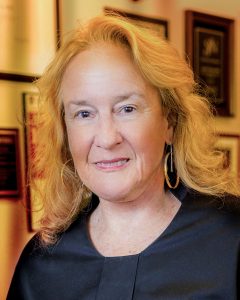 CNS: What first got you started in thinking about aging in the brain?
Barnes: I became interested in aging in the early 1970s when I went to the library. I was prompted by my mother who told me that my grandfather, who went on long walks, started getting turned around in his walks and so forth. I was in graduate school in Ottawa, Canada, and my mom said ‘you’re a psychologist. Is this normal? What, you know?’ So I went to the library.
Back then, when you opened a book on aging what you saw was ‘you get old, you lose thousands and thousands of brain cells, and you become senile.’ That was the consensus at that time. But I knew my grandfather was sharp, so I just didn’t buy it. And I knew I had a great aunt as well who was absolutely spectacular. So I just thought that there was something wrong here.
CNS: Now that you have been studying this topic for so many years, what have you learned was wrong about that characterization of aging?
Barnes: Looking back, I found out it’s all a stereotype and bias that our society has about aging. And as it turns out, my grandfather was fine. He was just aging normally, but he had some spatial memory deficits, which I spent a long time in my career examining in different species. I know now that’s a normal part of aging. And I have this mantra that my students get sick of, which is ‘aging is not a disease; it’s part of the developmental process.’
CNS: What has your team’s work revealed about how that process manifests in different species?
Barnes: Remarkably, similar kinds of memory changes happen in old rats, in old monkeys and in old humans, and they all have incredibly different lifespans. One of my old rats is about 2 years old. My old monkeys are 22 years old [you multiply a monkey’s age by three to get equivalent human years], and you’re deemed to be ‘old’ when you’re 65 as a human, although there’s not necessarily a biological reason why that age was chosen.
At each of these ages, these species have spatial memory deficits that implicate the hippocampus and hippocampus function. I think this is fascinating. There’s a biological process that happens in tissues of the body and in the brain that is simply sped up in other species, like rats and monkeys. The cognitive changes start to happen when the animals are considered to be old. This has got to be telling us something about what’s going on with memory and cognition with aging, because these changes happen in all of these species. And the hippocampus just happens to be a structure that’s well conserved across evolution in all mammals.
CNS: What have been some gaps your team’s research has filled in understanding aging in the brain?
Barnes: For my PhD thesis, I was to build off work that had discovered the biological basis of memory, long-term potentiation (LTP). No one had yet related LTP to memory, and so my contribution there was to relate the biological basis of memory to how accurate spatial memory was. The very best young animals on a spatial memory task had the longest, most durable LTP. And we found a difference between young and older animals, with a much faster decay of LTP in these older animals. That was a fundamental discovery.
In my postdoctoral work with John O’Keefe, we looked at the first recordings from place cells in young and old rats. There was some stability or instability in the way that younger versus older animals’ place fields expressed themselves. It was later confirmed in bigger studies with many more cells after we invented a type of electrode called the tetrode, which allowed many more cells to be recorded simultaneously. We showed that even in really familiar environments, with one exposure to a place in the morning and then the same one in the afternoon, young animals’ place fields were the same or stable, but old rats pulled up a completely different map in the afternoon session of the day, as if this was a new environment.
CNS: Why is that significant?
Barnes: From that, we proposed that maybe one of the bases of spatial memory not being as accurate is that it is more unstable in older animals. I don’t know whether you’ve experienced this yourself, but every once in a while when I’m not paying attention on a trail or something like that, I suddenly go ‘where am I?’ It’s that feeling we seemed to have captured, of pulling up the wrong map. Since then, we have done studies in monkeys and people building our understanding on that map instability.
CNS: You mentioned how multi-recording electrodes changed the game for your work. What about other technological advancements?
Barnes: Genetic, molecular analyses have helped us to understand the pathways that are involved in how cells are functioning and what’s important to plasticity. And my collaborator Paul Worley cloned the immediate early gene Arc [which produces RNA essential for LTP and memory consolidation]. When Arc is expressed, we also think that it corresponds to when a cell is firing at high rates as an animal goes through a place field. So we can use Arc as an activity marker as well as a plasticity indicator, and we’ve been able to compare young and old animals across wider regions of the brain.
It’s not difficult to find hard problems in neuroscience, but it has to be able to hang together as a story. I have perseverated for over 50 years on understanding the aging brain and memory, and I still find this problem to be compelling today.
CNS: Are there any findings that have surprised you?
Barnes: The hippocampus is only one system, and now in the lab we are recording from both hippocampus and entorhinal cortex simultaneously, as well as ventral hippocampus that connects with the prefrontal cortex. And we see there are so many parallel pathways in the brain that could contribute to navigation behaviors.
CNS: What advice do you have to early-career cognitive neuroscientists?
Barnes: Choose a problem in a topic that will sustain your interest for a long time. It doesn’t have to be the sexiest topic in the world at a particular moment in time. If it tickles your fancy, that’s what you should grab on to and go after. You have to be excited by the questions you are asking, and the questions have to be hard enough. It’s not difficult to find hard problems in neuroscience, but it has to be able to hang together as a story. I have perseverated for over 50 years on understanding the aging brain and memory, and I still find this problem to be compelling today.
-Lisa M.P. Munoz
