
CNS 2023 Q&A: Freek van Ede
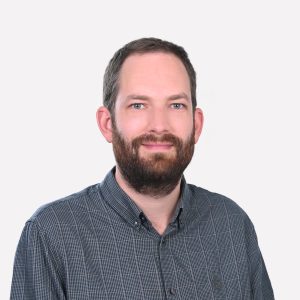
When people think about memory, they often think about the past, about looking backward. But for Freek van Ede, memory, in particular working memory, is about looking forward.
“Sometimes I think that the term ‘memory’ has lured us into studying working memory – and perhaps visual working memory in particular – primarily as a “storage system” concerned with holding onto the past,” van Ede explains. “This is essential to understand, but not sufficient. Working memory is also a central anticipatory buffer that enables us to prepare for potential and sequential courses of upcoming behavior.”
“Looking forward” for working memory will be the central theme of van Ede’s award talk this March at the Cognitive Neuroscience Society (CNS) annual meeting, as he is a co-recipient of the Young Investigator Award. A researcher at Vrije Universiteit in Amsterdam, van Ede will highlight recent studies from his lab that show the importance of tracking the dynamic nature of cognitive and brain functions across time.
We spoke with van Ede about his lab’s work and its significance, as well as how he got started in cognitive neuroscience and what he is looking forward to at the upcoming CNS conference in San Francisco.
 CNS: What got you started in cognitive neuroscience?
van Ede: During most of my undergraduate studies in psychology, I always felt that studying was exciting but that one day (after my studies) I would finally have to find a “real job”. It was only toward the end of my undergraduate degree that it occurred to me that studying the brain and mind could become my job – after all, it was the job of the professors who taught us. This was a turning point.
I was already fascinated by cognitive neuroscience, and deepened my interest during a master degree in cognitive neuroscience at the Donders Institute in Nijmegen. I stayed for my PhD, supervised by Eric Maris, and co-supervised by Ole Jensen and Floris de Lange. During my PhD, I studied the functional role of brain oscillations in the anticipation of touch. I only started studying working memory after my PhD, and became increasingly fascinated in this topic throughout the course of my five-years as a postdoctoral fellow in the Brain & Cognition lab headed by Kia Nobre at the University of Oxford.
CNS: What new insights are you and your team learning about working memory and how it influences future actions?
van Ede: I think we and others have only just started to bring anticipatory dynamics (including action planning, but also temporal expectation, task preparation, etc.) to the fore in the study of visual working memory. That said, I am of course also excited about what we have already achieved so far. For example, I am excited about the laboratory task that we have developed that enables us to link visual representations to specific manual actions, and to independently track their selection across time in EEG measurements.
I also continue to be excited about, and amazed by, how well it works to track internal selective attention ‘through the eyes’ – i.e. reading out from miniature eye-movements, known as microsaccades, when and where participants focus their attention in their minds. This has proven much more effective as a measure than I could have possibly imagined when we got into this branch of research a few years ago. I am also excited about another recent branch of our research that uses virtual reality, which opens the potential to investigate visual working memory, selective attention, and action, in immersive settings in moving participants.
I am excited particularly about the new questions these branches of research open. Using new approaches not only enables us to address old questions in novel ways. More importantly, perhaps, it also opens new questions – shaking up the creativity of the researcher in the process.
CNS: What new work will you present in San Francisco at the CNS annual meeting?
van Ede: I intend to highlight two new, unpublished studies from my lab in Amsterdam – that will each also be presented in poster format by two talented PhD candidates from my lab who will also be joining CNS 2023. In one, we show how the response-time increase with more items in working memory is not due to slower access to the memory contents themselves, but rather reduced preparedness to act on them. In another, we studied working-memory in a dynamic context in which memory contents were associated with distinct past (last-seen) and future (expected) locations. I will show how, rather than storing memory contents with regard to either past or future, past and future locations are jointly (re)activated when selecting memory contents for behavior.
How cognitive functions work together – rather than in isolation – to solve specific tasks and govern adaptive behavior still remains an important open question that I see as existing at the core of cognitive neuroscience.
CNS: What is the biggest question you still want to see answered in your field of study?
van Ede: This is in itself a big question that is hard to answer!
Sometimes I feel that in cognitive neuroscience we become very good at studying specific, isolated cognitive functions using conventional tasks and approaches. We form little ‘islands,’ with sub-communities of researchers who, like us, like to go about within the shores of the same island. Of course, I am not immune to this. However, I also believe it is important to increase awareness that real-world cognition and behavior ultimately depend on the cooperation and integration of multiple cognitive functions, and their associated neural computations. How cognitive functions work together – rather than in isolation – to solve specific tasks and govern adaptive behavior still remains an important open question that I see as existing at the core of cognitive neuroscience.
CNS: What are you most looking forward to at the CNS annual meeting in San Francisco this March?
van Ede: I am mostly looking forward to immersing myself in the breadth of topics that we collectively cover in our cognitive neuroscience community. Conferences like this provide an excellent opportunity to get off our ‘islands’: to see how we connect, to identify common questions and themes, to explore new ways to use existing methods, and simply to get inspired. Getting inspired not only by those working within our specialized field, but also, and perhaps especially, by those working on other interesting complementary questions outside our usual scope. This is really valuable.
In addition, I of course look forward to the social nature of the conference – to see, catch up, and hang out with so many beloved colleagues, many of whom I have not seen in years.
CNS: Is there anything else I did not ask you about that you would like to add?
van Ede: Obviously, I am deeply honored to be receiving this award, next to Anna Schapiro (Q&A with Schapiro here). Just as obviously, my research has always been a team effort, so I cannot be considered the sole recipient. I would have never received this award, were it not for the fantastic supervision and mentoring I received over the years. I am grateful to all with whom I had the pleasure to do research, with a special mention of Eric Maris and Kia Nobre who most strongly shaped my thinking and my approach to science.
-Lisa M.P. Munoz

Leave a Reply
You must be logged in to post a comment.