
CNS 2023 Q&A: Martha Farah
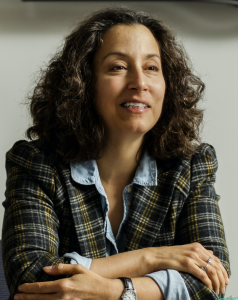
What can neuroscience contribute to our understanding of poverty? Can it, or is it like the proverbial bicycle to the fish, unrelated and without value? This is the heart of what Martha Farah, a cognitive neuroscientist at the University of Pennsylvania, will discuss in her keynote address at the CNS annual meeting this March in San Francisco.
Farah will present a body of work that shows just how much neuroscience may have to offer to our understanding on the harmful effects of low socioeconomic status on cognition and mental health. While the area of research is still burgeoning, it carries with it deep policy implications for how society addresses poverty.
I spoke with Farah about her upcoming talk, seeking to better understand how she got started on research in this area and to get a bit of a preview of the lecture in San Francisco.
 CNS: What got you first personally interested in studying the connection between poverty and neuroscience?
Farah: I first got interested in socioeconomic status [SES] after getting to know some people of low SES. Society is quite segregated by SES, and it’s rare for poor and middle-class people to be friends. In my case, I had hired some low SES women to babysit for my daughter as she grew up, and so naturally I wanted to know them well.
In the end, I became close with three of them and their extended families and learned about their ways of life. As second-generation recipients of welfare, with high school educations or less, their lives were very different from what I knew. Indeed, for all the progress our society has made toward racial, ethnic and religious integration, most of us (e.g. CNS members) have never paid a social visit to a very low-income person at home or spent time discussing personally meaningful topics with them, such as health, safety, children, aging parents, etc. I was in my early 40s when I had these experiences, and it changed my understanding of society and human nature. I saw vicious cycles of many kinds become economic and social “attractor states.”
CNS: So this event caused you to switch the focus on your research?
Farah: Yes. I wanted to understand the interplay between chronic poverty and human development. As a cognitive neuroscientist, I was best equipped to understand the relations between poverty and the brain. And so I left behind my previous life’s work on visual cognition and embraced this new topic.
CNS: Can you give us a preview of some of the new work you will present in the keynote in March?
Farah: I have not yet decided what new work to present, but it will probably concern the relation between socioeconomic status and depression, which I’ve been studying with postdoc Hannah Hao. Now, it’s probably not surprising that money problems and limited occupational choices would add to one’s risk of depression, but the effect is huge!
Much research has focused on the well-known sex differences in rates of depression – women are at higher risk – but that difference is dwarfed by the difference between the poverty line and upper income. Intriguingly, the difference is more of a gradient than a threshold. What accounts for the SES gradient? Is lower-SES depression just like higher-SES depression but more abundant (a difference in degree)? Or are different kinds of depression found at different levels of SES? How can neuroscience help us characterize the proximal risk factors at different levels, the nature of the depression at different levels, and possible implications for prognosis and treatment selection?
It’s early days so I don’t want to promise too much, but I hope to have some partial answers to these questions for you in San Francisco!
CNS: What are you most looking forward to at CNS 2023 in San Francisco?
Farah: I am looking forward to seeing all the cognitive neuroscientists I know! Between Covid and an injury, I have not been to an in-person meeting in three years, so I am craving some in-person time with my colleagues from all over!
-Lisa M.P. Munoz

Leave a Reply
You must be logged in to post a comment.